All posts by Webmaster

A Critique of Jarvis Thomson’s Violinist Argument for Abortion

11825169_852540941490570_5293584512141934428_n

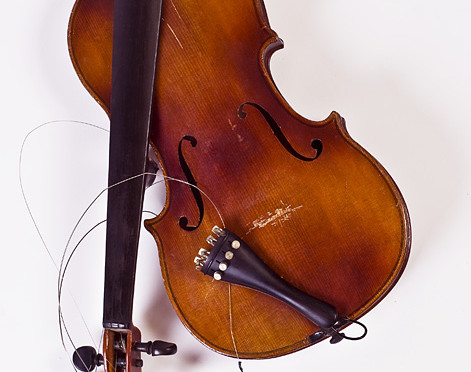
A widely quoted 1971 essay by Judith Jarvis Thomson utilizes an ethical dilemma to argue in favor of an alleged right to the kill the unborn. Her analogue of pregnancy is a universe in which a famous violinist is tethered for 9 months to a woman so that his life can be saved by sharing her kidneys. As is the case with many such dilemmas, the result is not an ethical isomorphism but, rather, a false analogy.

That Jarvis Thomson realizes that her arguments are flawed is evidenced by her attempt to buttress them with pseudoscience. Her initial remarks include the philosophically and scientifically erroneous assertion that “A newly fertilized ovum, a newly implanted clump of cells is no more a person than an acorn is an oak tree”.

Since, acorn and oak are both stages of Quercus alba, Thomson confuses the accidental with the substantial. A zygote is not a clump of cells but the initial single cell containing all the complete genetic information pertaining to a new individual. i.e., a zygote is as much a stage of human life as is, say, puberty. Indeed, there are 100,000,000,000,000 (i.e., 1014) atoms in a single cell –more than the number of stars in the Milky Way. In the unborn child, whose murder Thomson seeks to justify, there are more than a trillion such cells. This use of relative and therefore scientifically meaningless terms such as small and clump, is a standard rhetorical trick commonly employed by supporters of abortion to hide the actual complexity of the first stages of life -a complexity equivalent in organizational level to an adult human.

From physics, it can be deduced that at the moment of conception, the states of egg and sperm instantaneously “entangle”, to form new human life. While it lies outside the domain of even the most sophisticated mathematical models to ever fully describe the infinitely more complicated underlying reality, what is scientifically very well established is that full human life begins at the moment of conception [2].

Indeed, Jarvis Thomson’s analogy of unplugging a sick violinist is not even remotely equivalent to aborting a child. Donald DeMarco and Benjamin Wiker [1] identify numerous significant ethical differences including:

  1. The Nature of the Act
    “Unplugging from the violinist is justified by self defense and is not even the direct cause of death–which is a kidney ailment. Abortion, on the other hand directly kills the child. Defense against an aggressor is morally distinct from killing an innocent child.”
  2. The Nature of the Relationship Involved.
    “the mother-child is primordial, interpersonal and universally recognized. … A mother is expected to do things for her children that strangers are not expected to do for each other. …The moral question is not about the child’s “right” to occupy the woman’s uterus, but, since the child is already there, whether the woman has the right to expel the child”.

Thus, Jarvis Thomson’s ethical dilemma is not at all equivalent to the moral question of abortion and no conclusion can be drawn from her argument.

Jarvis Thomson’s article includes a second thought experiment which borders upon insanity:
“Suppose you found yourself trapped in a tiny house with a growing child. I mean a very tiny house, and a rapidly growing child–you are already up against the wall of the house and in a few minutes you’ll be crushed to death. The child on the other hand won’t be crushed to death; if nothing is done to stop him from growing he’ll be hurt, but in the end he’ll simply burst open the house and walk out a free man… However innocent the child may be, you do not have to wait passively while it crushes you to death… “

As DeMarco and Wiker [1] note:

“… She abandons existential realities and takes flight in the realm of the phantasmagoric. There, ensconced in that self created world, she makes pronouncements about how people should live and act in our real word. Her view of things proceeds independently from any recognition of an order of either reality or Providence. People-seeds blow into our houses, take root in our carpets, and ask us to be their caretakers. This is science fiction, not the real world. The greatest danger in her thinking, however, is not her approval of abortion, but her portrayal of a world that is frightening in its arbitrariness and utter inhospitality that the only refuge we can take is within our own isolated will…”

Jarvis Thomson’s argument is based on the obvious fallacy that, to prevent the mother from being “crushed to death”, the unborn child should be “stopped”. It is ironic that the notorious pro abortion organization Planned Parenthood/Profamilia selectively crushes unborn babies in order to extract and sell their organs.

planned-parenthood-video-crush-b

That Jarvis Thomson’s scientifically and philosophically flawed pseudo-intellectual opinion piece is still widely disseminated by supporters of induced abortion evidences the weakness of their arguments.

References

  1. Donald De Marco and Benjamin Wiker, Architects of the Culture of Death, Ignatius Press, 2006
  2. Jerome Lejeune’s Expert Court Testimony regarding the nature of human embryos
  3. Calvin Freiburger, Pulling the plug on the violinist argument for abortion
  4. What’s wrong with Judith Jarvis Thomson’s ‘violinist analogy’ for abortion? LifeTV.net.nz

The Dictatorship of (Thermodynamic) Relativism

A parable to illustrate that the same set of data can be compatible with both alleged global warming and cooling simultaneously, ergo, proving that both sides in this nonsensical debate are correct.

“Let all the world know that the power of kings is empty and worthless, and there is no king worthy of the name save Him by whose will heaven, earth and the sea obey eternal laws.” – King Cnut.

In the recently highly anticipated encyclical on the environment, Pope Francis alludes to a conjectured ecological crisis involving global warming.

Pope Francis is not the only pontiff to have addressed the controversial subject of global warming. Legend has it that, for a brief period during the Dark Ages, the Roman Catholic Church was led by a certain Pope Calefacio. His predecessor, the now-emeritus Pope Gelatio, had retired on grounds of poor health.

Calefacio, a chemist by training, was a firm believer in the theory of bovoprogenic global warming—a kind of hell on earth produced by the flatulent emissions of livestock. His conviction was reinforced on the very day of his inauguration, when a spell of climatic instability descended. Some theologians attributed the turmoil to diabolical influence.

Throughout Gelatio’s reign the temperature had remained a steady (16°T). Yet during a period of particularly inclement weather, Calefacio recorded readings of (36°T) and (0°T). Ignoring the cautions of statisticians, he averaged the two values to obtain (18°T) and promptly declared a warming of (2°T).

Risking charges of climate-denial heresy, Gelatio objected that the scale (degrees T) was based on unreliable tree-ring proxies. He proposed instead the excellent ice beer brewed by his own monastic order as a superior thermometric substance, with temperatures measured in the corresponding scale (degrees G). Proxy measurements showed the two scales were related by a square-root function—a transformation that, at least, preserved the thermodynamic ordering.

Under this new scale, the old average of (16°T) became (4°G), while the two recent readings converted to (6^°G) and (0°G), yielding a new mean of only (3°G. Gelatio therefore concluded that the data actually indicated a cooling of 1°G.

In this way the wise Gelatio had inadvertently rediscovered a fundamental truth: the arithmetic mean of a random variable is not preserved under nonlinear transformations.

No records survive of how this theological-thermodynamic schism was resolved, nor whether denialism was ever declared heretical. Indeed, serious scholars now regard the entire episode as a myth, noting the implausibly large chronological gap between the two popes and their earliest mention in texts. Nevertheless, theories of bovoprogenic warming remain in vogue today—notwithstanding the Russian philosopher Soloviev’s warning that the Antichrist would appear as an ecologist, ecumenist, and pacifist.

Like its planetary counterpart, this fable shows how the same pair of measurements can be interpreted as either warming or cooling if a non linear change of temperature scale is used.

by Philip Pennance

References

  1. Philip Pennance, Concerning the Measurability of a Global Mean Surface Temperature, Revised March 30, 2026.
  2. Philip Pennance, Physical Applications of the Stevens’ Classification of Random Variables, March 2006 – Revised April 3, 2026

Abu María y Abu Pepe en la UPR

FUENTE: Fieles a la Verdad

Imagina a tus abuelos o bisabuelos—llamémosles Abu María y Abu Pepe—de regreso en la tierra por unas horas. Visitan la UPR-RP para sorprenderte y, como solían hacerlo, para echarte la bendición.

Luego de sobreponerse a la impresión de que, en vez de en el Primer Centro Docente, se les ha abandonado en una playa sin olas—una playa des-olada—a juzgar por las vestimentas, los bronceados, los jóvenes audifonados tirados tomando el sol, los tenderetes de comida y la música destemplada por doquier… te buscan en la primera clase.

Teatro. No has llegado. Escuchan a tu Profesor decir que su método de enseñanza predilecto es el uso de malas palabras porque con ellas se recuerdan mejor las cosas. Abu María recuerda la tunda que sus padres le dieron la única vez que osó decir ^*&!@. Sí lo aprendió de inmediato: no repetirla. El Profesor aprovecha para burlarse de la religión y de los religiosos. Advierte que no tolerará las caras indignadas ni retos de modestia a sus estilos, mientras lanza una mirada airada a la única joven que luce algún recato. Abu María y Abu Pepe, quienes ya han probado los Misterios, se escabullen hacia el siguiente salón.

Literatura. Falta la Profesora. “Pobrecita,” pensaron Abu María y Abu Pepe, “habrá sufrido algún percance terrible.” En sus cabezas labradas de candidez, fidelidad, y compromisos ineludibles, no cabía que alguien se ausentara porque “se me pasó la hora,” porque “me lo merezco,” porque “total, en la primera semana no se hace nada” o, sencillamente, “porque sí.” Como la Profesora. Como tú. “A la tercera va la vencida,” entonaron. Tú jamás faltarías a la clase de Música.

Música. El erudito en Historia de la Música ridiculiza la música gregoriana y los cantos del rito latino. Empapadas sus palabras de cinismo, concluye que no hay música mejor que otra. Una batucada de cuneta y una fuga de Bach son igualmente música. Abu María y Abu Pepe creían firmemente en la Belleza, confirmada ya en el Cielo. Huyen despavoridos hacia la Placita frente al Teatro, abriéndose paso por entre los jóvenes recostados a lo largo del histórico edificio—jóvenes con miradas imprecisas, nubladas, perdidas: unos fumando algo que huele a no sé qué; otros en la eterna espera.

Sentados ya en un banquito, sobrecogidos, Abu María y Abu Pepe. La mayoría—jóvenes y adultos—pasaba ensimismada, ajena a su presencia, con la vista fija en pequeños aparatos cuyas pantallas giraban sin cesar. Otros miraban a Abu María y Abu Pepe de reojo, insolentes, cual si fuesen despojos de huracán.

Abandonan su búsqueda. Regresan a su Feliz Morada. No los viste.

Tú estabas entre los tirados sobre los pasillos del Teatro. Estabas demasiado ocupado intercambiando selfies, memes y palabrotas con tu corillo. Ni siquiera te acordaste de tus clases. Ya les tomarás fotos a las notas ilegibles de tus compañeros. Te sentirás más que satisfecho con tu comienzo de clases. Total.

No los viste. A Abu María y Abu Pepe, que añoraban echarte la bendición, no los viste. Ellos no te reconocieron cuando huían entre el rebaño regodeándose en el Teatro. Así de cambiado estás.

Y pensar que gracias a Abu María y a Abu Pepe, a sus trabajos y sacrificios, ellos—y tú—están aquí.

¿Por Qué el Verdadero Amor Espera?

Fuente: Fielesalaverdad.org

El verdadero amor espera. En un mundo en el que se precian los placeres instantáneos y las respuestas fáciles, esta frase te podrá parecer extraña o aun fantasiosa. Sin embargo, en tu interior sabes que dichos placeres y respuestas, aunque tal vez seductores, no contestan tus inquietudes ni llenan tu existencia. Te llamamos a ti, joven que no te conformas con lo superficial y lo mediocre. Te llamamos a ti, joven que buscas las respuestas correctas y la verdadera felicidad.

¿Por qué el verdadero amor espera? ¿Qué es la castidad? La castidad ejercita todas las virtudes cardinales: la justicia, la fortaleza, la prudencia, la templanza o moderación. Justicia porque se afirma la persona a sí misma y a los demás como seres con dignidad y valor intrínseco. Fortaleza porque requiere resistir y decir NO ante los halagos, las presiones o aun la burla de otros: la pareja, las “amistades”, el grupo. Prudencia porque requiere la recta razón y la aplicación de principios universales a acciones particulares. En especial, la castidad es una virtud de templanza porque requiere autodisciplina, autocontrol, el manejo de las pasiones y apetitos sensuales por la razón. Si controlas tu ingesta de calorías con el propósito de mantener tu salud y evitar padecer de los males que provoca la obesidad, cuanto más necesario el autodominio en la sexualidad. De ello depende tu salud física, social, y espiritual, al igual que la de tu pareja e incluso otros. … Leer el resto en fielesalaverdad.org

The UPR Curriculum War

¿No es el Anteproyecto de Un nuevo bachillerato para el año 2000, desde su mismo título, una especie de utopía defectuosa, un desgarrado esfuerzo totalizador de propuestas educativas que tienen, como mal de fondo, la ingenua pretensión de contenerlo todo; un modelo ecléctico que pretende reunir los fetiches ideológico-educativos del momento? —Dennis Alicea Rodíguez

  1. El Debate
  2. Cronología
  3. Apelación a la Junta Universitaria
  4. Apelación a la Junta de Síndicos
  5. Observaciones
  6. Escuela de Comunicación
  7. Conferencia de Prensa – Mayo 4, 2002
  8. ¿Reconceptualización igual a reducción?
  9. Philosophy
    1. Postura – Departamento de Filosofía
    2. Reflexiones Filosóficas
  10. Mathematics
  11. Quantitative Reasoning
  12. First Year Seminar
  13. Reunión del Claustro de Profesores – El 5 de Mayo 2003
  14. Resolución
  15. Essays
    1. An Early Warning concerning Computer Instruction, Silviu Teleman, 1991.
    2. Nuevo Bachillerato Universitario: ¡Andy Warhol vive!, José Arsenio Torres
    3. La Utopía Defectuosa, Dennis Alicea Rodríguez
    4. El «nuevo bachillerato para el 2000» y el ajuste neoliberal de la universidad, Juan Duchesne Winter
    5. Constructivism in Education Constructivism in Education: Sophistry for a New Age, Martin A. Kozloff May 1998
  16. Boletines
    1. Febrero 27, 2003 – Mensaje sobre la Reconceptuación
    2. Marzo 21, 2003 – Administración de Empresas Rechaza el Proyecto de Reconceptuación
    3. Mayo 1, 2003 – Exhortación
    4. Mayo 8, 2003 – Claustro Rechaza el “Nuevo Bachillerato”
    5. Mayo 20, 2003 – Aviso Importante
    6. Agosto 26, 2003 – Rectora Desafía al Claustro
    7. Septiembre 16, 2003 – Boletín al Claustro del Recinto de Río Piedras
    8. Febrero 2004 – Rectora Abdica a Su Responsabilidad
    9. Septiembre 27, 2004 – Llamado de Alerta a la Comunidad Universitaria
    10. Agosto 2005 – Lo último relacionado con el “nuevo” bachillerato
    11. Septiembre 2005 – Se retoma el debate sobre la reconceptuación

The Logical Case against Climate Panic

A climate scientist once informed me that “Climatologists do not use the logic of Pure Mathematics.” Indeed he was correct. A recent essay by Viscount Monckton of Brenchley explains how, in his words, “the profiteers who market Thermageddon offend against the principles of formal logic.” According to Monckton,

Logic is the heartbeat of all true learning – the soul of the Classics, the Sciences and Religion. Once everyone studied the Classics, to know that in logic there is a difference between true and false; the Sciences, to discern where it lies; and Religion, to appreciate why it matters. Today, few study all three empires of the mind. Fewer study the ordered beauty of the logic at their heart.

Read Viscount Monckton’s essay

Philosophical Turn

Mindful of the big, human questions
the illustrious Department was —
What is beauty? Who am I?
What is real? What is good?
Rigorous, nourishing, fair
its philosophical fare
from great thinkers, past and new
lovers of wisdom, of virtue,
engaged in the search for truth.

Retirement and school “reform”
spelled a nefarious turn.
Postmodern and Marxist wands
wave from once prestigious slots,
mesmerizing impressionable minds.
Nietzsche, Dewey, Foucault,
Lukács, Hegel, Derrida
strewn in insipid broth.

Écrasez the ancients and medievals,
aesthetics and metaphysics,
natural law, final ends –
too naïve, too common sense,
too theistic, too simplistic.
Contemplation? Out of date!
Ethical systems? Passé!
Eternally doubt instead!
Exclaim with smug inflection:
it’s all relative, anyway!

You are most welcome! See yourself!
This “Philosophy” Département
Nothing is true, everything goes
Little substance, and all show
Time, act, language, history,
cartoons, photos, memes, and films —
equally worthy subjects be
of philosophical inquiry
Speculate the Internet!
Jilt real musing at the Cave!

To this college by the sea
just show up, follow your bliss
Soon you will too cogitate
Beyond Good and Intellect.

Primer día de clases en la UPR

“By definition, now, there is no learning, because truth is dismissed as an old-fashioned superstition. Instead … there is perpetual ‘research’ on anything and everything. In virtue of the Parkinson’s law, the professional historian must keep on publishing. Whiteside’s monument to Newton, like Wren’s masterpiece for St. Paul, will soon be hidden by towering concrete hives of new bureaus and new slums.”—Truesdell (1984, p. 292): “An Idiot’s Fugitive Essays on Science”.

Apenas son las Octavitas. Pero hoy, jueves 10 de enero, te aprestas a acudir a tu primer día de clases en el Principal Centro Docente del País. Los martes y jueves son tus días más pesados: de 8:30am a 2:20pm, sin receso. Mochila a cuestas te apresuras para sentarte en tu primera clase.

8:30am. EDFU. La profesora no llega. Junto a 18 estudiantes más, esperas por veinte minutos. Deciden irse. Aprovechas entonces para hacer un cambio de sección y verificar el salón asignado — por quinta vez — a la próxima clase.

10:00am. LITE. El profesor te asegura que no hay tal cosa como un “canon literario.” Te predica que es absurdo hablar de textos “clásicos” porque el valor literario, al igual que todos los valores, es relativo. Lamenta tener que cubrir (se lo requiere la coordinación) ciertos autores cuya principal deficiencia parece ser haber nacido blancos y norteamericanos. Te asigna autores tan oscuros que una búsqueda rápida en Google apenas si acierta en encontrar. Deben ser excelentes, infieres de la cátedra de hoy, porque ni son blancos ni norteamericanos ni, mucho menos, cristianos. Guardas tu rosario, por si acaso. (No hay prontuario porque la copiadora del Departamento se dañó.)

11:30am. INGL. Esperas un curso de composición avanzada, pero sólo tendrás que escribir (a manera de diario reflexivo) unos parrafitos durante la clase porque el profesor quiere evitar el plagio. Los temas serán de tu agrado. Nada de reglas ni criterios estéticos. Les repite (¿les dramatiza?) que no hay opiniones mejores que otras y que todo escrito tiene igual mérito. (Recuerdas esto por si recibes menos de B en el curso). ¡Loco, saber que Shakespeare no era mejor que tú te tiene pompeao! Te sueltan 15 minutos antes. Facebook check. (No hay prontuario porque al profe le asignaron la clase ayer.)

1:00pm (¿1:20pm?). ESPA. La profesora anunció la lista de lecturas. Muchas escritoras contemporáneas, ¡qué cool! Nos persuadió de que no hay tal cosa como “verdad” (sí, siempre con comillas) y que nosotros construimos nuestro propio conocimiento. Reiteró su frase favorita, de su amado Nietzsche: “no hay hechos sino solo interpretaciones.” Fácil. Ibid. Ibid. (No hay prontuario porque no cree en los prontuarios.)

2:20pm. Listo. Te comes un pastelón de papa con carne de soya en el kiosquito, no sin antes espantar un par de avispas que te acosan.
¡Felicitaciones, has sobrevivido tu primer día de clases en la UPR! Ahora sólo te faltan 29 días más.

Sentado ya en el Tren de regreso a casa, te preguntas qué aprendiste hoy. Te preguntas, además, qué aprenderás durante el semestre. Las respuestas te incomodan. Necesitas urgentemente un remedio. Si no quieres padecer de déficit intelectual terminal (DIT) al finalizar tu carrera “universitaria” (sí, con comillas), lee a la mayor brevedad lo siguiente:

  1. DeMarco, D. y Wiker, B. Architects of the culture of death. Ignatius, 2004. Aquí conocerás las verdaderas historias y lecciones de los siguientes ídolos de muchos de tus maestros (y varios de tus colegas también): Darwin, Marx, Sartre, de Beauvoir, Sanger, Nietzsche, Freud, entre otros.
  2. Lewis, C. S. The Abolition of Man (1943), The Screwtape Letters (1942). Dos clásicos de uno de los muchos pensadores destacados (junto a G. K. Chesterton, Hilaire Belloc, Jacques Maritain, Josef Pieper, entre otros) que, desgraciadamente, no te asignarán en tus cursos.
  3. Schall, J. V. Another sort of learning. Ignatius, 1998. ¿Cómo debe ser una verdadera formación universitaria? Aquí encontrarás respuestas. También incluye recomendaciones de lecturas.
  4. Zmirak, J. (Ed.). Disorientation: How to go to college without losing your mind. Ascension, 2010. En esta antología aprenderás cómo argumentar sobre los “ismos” más populares en el aula universitaria: relativismo, hedonismo, multiculturalismo, feminismo, utilitarismo, marxismo, cinismo y cientifismo, entre otros.

Cuando termines de leerlos, visita aquí, aquí, y aquí para más recomendaciones. También te interesará ver el vídeo de Peter Kreeft, profesor de Filosofía de Boston College, sobre los debates ideológicos en la cultura actual.

Disfrutarás esta aventura intelectual. No olvides invitar a tus colegas y amistades. ¡Te lo agradecerán! ¡Bienvenidos a una verdadera educación universitaria!

Religion and Philosophy Posts

The wise men’s gift

Alma Acevedo | Friday, 4 January 2013
Source: Mercator Net

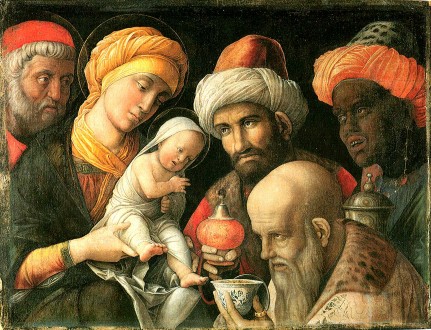
For us, children of a then more pious land, it was el gran día (the great day). Three Kings’ Day was, after Christmas, the greatest festivity of the year. It was a special holy day — of sharing, song, and celebration. Young and old alike looked forward to it with merry anticipation.

“Now when Jesus was born in Bethlehem of Judaea in the days of Herod the king, behold, there came wise men from the East to Jerusalem, Saying, Where is He that is born King of the Jews? for we have seen His star in the East, and are come to worship Him.” (Matthew 2:1-2)

It used to be that we believed. It was the mystery and the renunciation.

Continue reading The wise men’s gift →