Precalculus Mate 3018 is a “pre-mathematics” course reviewing topics which should have been —but which frequently are not— covered in the high school.
Course Content
Topic 1. Set theory, propositional and predicate logic
- On Definition (Definition according to Aristotle)
- On Truth
- On implication
- Validity
- Review of Elementary Set Theory and Logic
- Venn Diagrams
- Unix File Permissions
- Practice Questions on Sets
- The Square of Opposition
- Truth tables
- A list of tautologies
- Practice Questions on Logic and Definition
Topic 2: Binary Relations and Functions
- Binary Relations and Functions
- Image of a function
- Questions on Functions
- Preguntas de práctica sobre funciones finitas
Topic 3: Mathematical proof. The natural numbers
- Elementary version of fractions.
- The division theorem.
- The division algorithm
- Santos Section 1.2
- Notes and exercises on the real line
- Practice Questions on Fractions, the Number Line and the Division Theorem
- Practice Questions on the Methods of Proof
- Mathematical Induction
- Questions on Mathematical Induction
Topic 4: Sequences and summation notation
Topic 5: Combinatorics
- The cardinality of a set
- The inclusion-exclusion principle for two sets
- Practice Questions on Sets
- Elementary combinatorial formulae
- Pascals lemma
- The binomial theorem
- Preguntas de práctica sobre el teorema binomio
Topic 6: The real numbers. Order and absolute value
- Properties of the real numbers
- Order and Inequalities
- Practice Questions on the Quadratic
- Practice Questions on the Real Numbers
- Preguntas de practica sobre el orden en los numeros reales
Topic 7: The Euclidean plane
- The Cartesian plane
- Notes on lines
- Straight Lines
- The Plane
- Some Standard Forms of the Straight Line
- Graphing
- Graphing examples
- The Circle
- The Parabola
- Questions on Graphing
- Analytic Geometry Questions
Topic 8: Functions of a real variable
- The image of a function
- Different types of function
- The algebra of functions
- The inverse of a bijective function
- Preguntas de práctica sobre funciones – Parte 2
Topic 9: Exponential and logarithmic functions
- The exponential and logaritmic functions
- Exponential functions–review
- Preguntas de práctica sobre logaritmos
Topic 10: Polynomials. I
Topic 11: Polynomials II
Topic 12: Circular functions.
- Graphs of the inverse trigonometric functions
- Preguntas de practica sobre las funciones trigonométricas
Topic 13: Trigonometric equations and identities
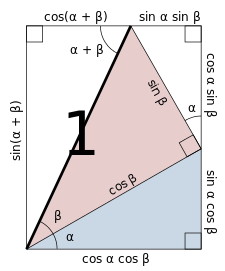
- The Four Trigonometrical Addition Formulae
- The Solution of Triangles
- Preguntas de practica sobre las ecuaciones trigonométricas
Old Exams
Exam I | Exam II | Exam III | Exam IV
Textbooks
- (Free) Precalculus Book by David Santos
- (Free) Ossifrage-And-Algebra-2007 by David Santos
- (Free) Pre-y Cálculo Criollos (Spanish Version) by David Santos
- (Free) Andragogic Propaedeutic Mathematics by David Santos
- (Free) Differential Calculus by David Santos
Notes on the Bibliography
A Bibliography is included in the course syllabus above. Please read the following remarks before deciding on which books to purchase.
The great price (and weight) of precalculus textbooks bears no relation to their academic quality. The very excellent Elementary Algebra and Precalculus texts by David Santos can be legally downloaded (See syllabus for a link). For math majors and students aiming to achieve a good scientific level, these are preferable to the current official text.
The following books contain material relevant to the course. The translation of Mathematics, Japanese grade 9 by Kunihiko Kodaira is an excellent review of material from high school algebra and geometry. It also includes a section on probability and statistics. Mathematics, Japanese grade 10 contains most, though not all, of the material in MATH 3171 as well as some trigonometry from Math 3172. It manages to achieve in 200 pages what the recommended text struggles to do in 1000. The text Algebra and Geometry, Japanese Grade 11 covers plane and solid geometry, vectors and matrices.
The text Introductory Analysis by Dolciani et al. has been used by the Department in previous years so it can be obtained at a modest price in the street or from Amazon (for less than $10 used). It is more carefully written than the official text and at a higher mathematical level.
As its title suggests, the book Foundations of Mathematics by Stewart and Tall gives a more profound view of the foundations of Mathematics and the construction of the numbers than the other texts. Any student who is serious about achieving a good level in Mathematics should know the material in this book.